

Ayurvedic Detox: Best Herbs for Each Dosha
Ayurvedic detox focuses on cleansing toxins (ama) from the body and reigniting digestive fire (agni), tailored to your unique dosha - Vata, Pitta, or Kapha. Each dosha has specific needs for detox, and the right herbs can make a big difference.
Key Points:
- Vata (Air & Ether): Needs grounding and warming. Best herbs: Ashwagandha, Triphala, Dashamoola.
- Pitta (Fire & Water): Needs cooling and calming. Best herbs: Manjistha, Guduchi, Kutki.
- Kapha (Earth & Water): Needs stimulating and lightening. Best herbs: Trikatu, Punarnava, Tulsi.
Universal Herbs:
- Triphala: Supports digestion and balances all doshas.
- Guduchi: Detoxifies the liver and boosts immunity.
Timing and preparation matter. For example, Kapha types benefit from herbs in the morning, Pitta during midday, and Vata in the evening. Incorporate these herbs into teas, meals, or powders for effective detoxification.
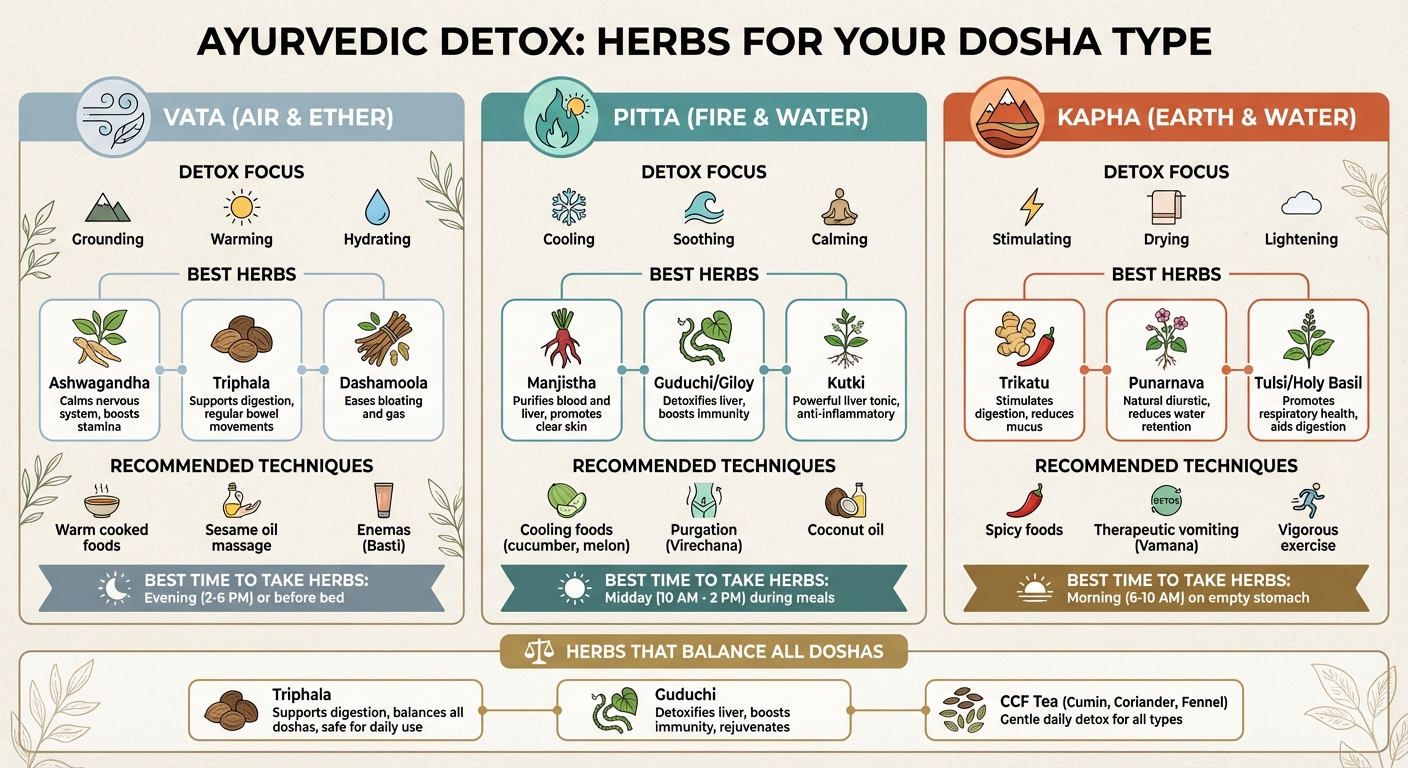
Best Ayurvedic Detox Herbs for Vata, Pitta, and Kapha Doshas
How Ayurvedic Detox Works
Ayurvedic detox builds on the principles of natural cleansing by working with your body’s own purification systems. The idea is simple: strengthen your digestive fire (agni) to prevent the creation of new toxins, and then eliminate existing ama (toxic buildup). Unlike modern cleanses that often focus on a single organ and can leave you feeling drained, Ayurveda takes a holistic approach, supporting your liver, kidneys, skin, and sweat glands all at once. This gentle method not only clears toxins but also reinforces your body’s natural ability to stay clean.
"Ayurvedic detoxes are never harsh or forceful - instead, they simply support and enhance your body's innate ability to release toxins." - Maharishi Ayurveda
The detox process happens in three stages. First, Purvakarma (preparation) works on boosting agni with a clean diet and oil massages to loosen toxins stored in deep tissues. Next, Pradhankarma (main phase) focuses on cleansing procedures that flush these toxins into your digestive system for removal. Finally, Paschatkarma (post-detox) uses rejuvenating herbs (Rasayana) to restore energy and rebuild strength. A typical Ayurvedic detox plan might include 15 days of preparation, followed by 45 days of herbal cleansing, with specific herbs and spices fine-tuning the process.
Using Herbs and Spices to Improve Digestion
Certain herbs and spices play a key role in strengthening agni and ensuring your digestion runs smoothly. For example, ginger is a warming herb that stimulates digestion, improves circulation, and helps burn off toxins. Sipping warm water boiled with fresh ginger throughout the day can dissolve toxins and boost metabolism. Turmeric, known for its blood-purifying and liver-supporting properties, is typically taken in doses of 500–1,000 mg daily during a detox. Meanwhile, cumin and fennel are excellent for reducing bloating, relieving gas, and improving nutrient absorption. They can be added to meals or brewed into a calming tea.
To maximize digestion, Ayurveda suggests eating your largest meal at midday when agni is strongest. Meals spaced 4–6 hours apart allow your digestive system enough time to process food fully, preventing the formation of new toxins. Simple morning habits, like drinking warm water with lemon to flush out overnight toxins and scraping your tongue to remove ama buildup, can set the tone for an effective detox day.
While these herbs and practices enhance digestion, tailoring your detox to your dosha ensures the process works harmoniously with your body.
Matching Detox Methods to Your Dosha
Your dosha, or Ayurvedic body type, determines the detox methods that will best suit you. Each dosha has unique needs, so the goal is to support your body’s balance without causing unnecessary stress.
- Vata types (dominated by air and ether) need methods that are grounding, warming, and hydrating. Harsh or cooling cleanses can make them feel dry or anxious. Warm, cooked foods, sesame oil massages (Abhyanga), and gentle enemas (Basti) are ideal for Vata.
- Pitta types (dominated by fire and water) benefit from cooling and soothing techniques to calm excess heat and inflammation. Cooling foods like cucumber and melon, purgation therapies (Virechana), and coconut oil are recommended.
- Kapha types (dominated by earth and water) thrive with stimulating, drying, and lightening approaches to counter their naturally heavy and slow tendencies. Spicy foods, therapeutic vomiting (Vamana), and vigorous exercise can help balance Kapha.
Here’s a quick breakdown for clarity:
| Dosha | Primary Elements | Detox Focus | Recommended Techniques |
|---|---|---|---|
| Vata | Air & Ether | Grounding, Warming, Hydrating | Warm cooked foods, sesame oil massage, enemas |
| Pitta | Fire & Water | Cooling, Soothing, Calming | Cooling foods, purgation, coconut oil |
| Kapha | Earth & Water | Stimulating, Drying, Lightening | Spicy foods, therapeutic vomiting, exercise |
Best Detox Herbs for Each Dosha
Herbs can help balance the unique qualities of each dosha: warming herbs suit Vata, cooling ones benefit Pitta, and stimulating herbs work well for Kapha. Here’s a closer look at the best options for detoxifying each dosha.
Vata Dosha: Warming and Grounding Herbs
Vata types need herbs that calm the nervous system and encourage regularity. Ashwagandha is an exceptional choice - it helps ease anxiety and boosts stamina. You can take it as a powder or in capsules as part of your daily regimen. Triphala, a blend of three fruits (Amalaki, Bibhitaki, and Haritaki), is perfect for supporting healthy digestion and regular bowel movements without causing dependency. To use, steep ½–1 teaspoon of Triphala powder in boiling water, let it cool, and drink it about an hour after dinner. Another great option is Dashamoola, a traditional mix of 10 roots. It’s often used in enemas (basti) to ease bloating and gas, but it’s also available as a tea or powder for everyday use.
"Triphala can be taken indefinitely, even for Vata types. It is tridoshic and non-habit forming. In fact it is a unique formula that can be taken for one's entire life."
– Danielle, Certified Advanced Ayurvedic Practitioner, Svastha Ayurveda
Pitta Dosha: Cooling and Liver-Cleansing Herbs
Pitta types benefit from herbs that cool internal heat and cleanse the liver. Manjistha, a vibrant red root, is excellent for purifying the blood and liver while promoting clear skin. It’s usually consumed in powder form (250 mg to 1 g daily), mixed with cool water or aloe vera juice. Guduchi (also called Giloy) is another great herb for balancing Pitta, detoxing the liver, and boosting immunity. It’s available as a powder, tablet, or liquid extract. Kutki, known for its intense bitterness, acts as a powerful liver tonic with anti-inflammatory and antimicrobial benefits. Since it’s so bitter, capsules (250–500 mg daily) are the easiest way to take it.
For an extra cooling effect, try infusions made with mint, coriander, or fennel seeds throughout the day.
"Manjistha is a great option for detoxification... its main action is to cool and cleanse both the blood and liver."
– Danielle, Advanced Ayurvedic Practitioner, Svastha Ayurveda
Kapha Dosha: Stimulating and Decongesting Herbs
Kapha types thrive with herbs that ignite digestion and clear congestion. Trikatu, a mix of ginger, black pepper, and long pepper (pippali), is a fantastic option for stimulating digestion and reducing mucus. Add a pinch to warm water or honey before meals. Punarnava works as a natural diuretic, helping to reduce water retention and support kidney health. It’s usually taken as a powder (500 mg) or in tablet form twice daily. Tulsi (holy basil) is another excellent herb for Kapha, promoting respiratory health and aiding digestion. Two organic Tulsi tablets daily can help keep airways clear and digestion smooth. For additional benefits, incorporate turmeric into meals or enjoy it in golden milk to combat inflammation and boost metabolism.
For a simple Kapha tonic, mix 1/3 teaspoon of black pepper with 1 teaspoon of honey and let it dissolve on your tongue. This helps clear excess fat and supports healthy digestion - perfect for aligning with Ayurveda’s holistic detox practices.
Herbs That Work for All Doshas
Triphala and Guduchi for All Doshas
Certain herbs have the remarkable ability to balance all three doshas, making them a reliable choice for anyone aiming for a consistent detox routine. Triphala is one such herb, a classic Ayurvedic blend made from three fruits: Amla (Indian gooseberry), Haritaki, and Bibhitaki. Known for its gentle yet effective digestive support, Triphala is safe for daily use. To incorporate it into your routine, mix ½ to 1 teaspoon of Triphala powder with warm water and drink it either before bed or first thing in the morning on an empty stomach.
"Triphala is a unique formula that can be taken for one's entire life."
– Danielle, Founder, Svastha Ayurveda
Another powerhouse herb is Guduchi (also called Giloy), which is prized for its ability to rejuvenate and detoxify. It supports liver health, cleanses the blood, and enhances immunity while balancing all three doshas. Guduchi can be taken in powder, tablet, or juice form, ideally in the morning or before meals, to promote energy and deep cleansing.
For a lighter daily detox, coriander seeds are a gentle option. They help flush toxins through the urinary tract and soothe the digestive system. Simply soak 1–2 teaspoons of seeds overnight, boil the water in the morning, and sip it warm throughout the day. Other common kitchen herbs like ginger, cumin, fennel, black pepper, and turmeric are excellent for removing ama (toxins) when added to meals or brewed into teas. These simple additions can strengthen your detox routine effortlessly.
Herb Combinations for Mixed Dosha Types
While some herbs benefit all doshas, tailored combinations can address the unique challenges of mixed dosha types. For Vata-Pitta types, Triphala and Guduchi make a solid foundation, complemented by cooling yet non-drying herbs like fennel and coriander to counteract both heat and dryness. Pitta-Kapha types thrive with bitter herbs like Manjistha or Neem paired with Guduchi to clear heat and stagnation without overwhelming the system. Meanwhile, Vata-Kapha types benefit from Triphala combined with warming herbs like ginger or Guggulu, which help clear congestion and maintain bowel regularity.
For those using stronger cleansing herbs such as Neem or Vidanga, it's wise to balance their drying properties. For Vata types, blending Neem or Vidanga with Ashwagandha and Guduchi in a 3:3:2:1 ratio can help maintain equilibrium. Another versatile option is CCF tea, a blend of cumin, coriander, and fennel, which provides a gentle, daily detox perfect for all dosha types. This simple tea is an easy way to support overall balance and cleansing.
sbb-itb-9616115
Adding Ayurvedic Herbs to Your Daily Routine
How to Prepare and Use Ayurvedic Herbs
Ayurvedic herbs come in various forms that can easily fit into your daily habits. For instance, you can mix ½ to 1 teaspoon of herbal powder into 8 ounces of warm water for a quick and simple preparation. Teas and decoctions are another popular option. One example is CCF tea, made by boiling 1 teaspoon each of cumin, coriander, and fennel seeds in 16 ounces of water until the liquid reduces by half. If convenience is your priority, capsules are a great choice, with typical dosages ranging from 250 mg to 500 mg, taken once or twice a day.
You can also incorporate herbs like black pepper, turmeric, and ginger into your meals to aid digestion and cleanse the body. For a deeper detox, prepare kitchari - a nourishing dish made from rice, mung beans, and spices - and consider adding 1 teaspoon of medicated ghee (ghruta) to enhance nutrient absorption.
The timing and method of preparation are key to maximizing the benefits of Ayurvedic herbs, especially when tailored to your dosha.
When to Take Herbs Based on Your Dosha
Timing your herb intake to align with your dosha’s natural energy cycles can enhance detoxification and overall effectiveness. Each dosha - Kapha, Pitta, and Vata - has specific four-hour windows during the day when its energy is most active.
- Kapha types should take stimulating herbs early in the morning (6–10 a.m.) on an empty stomach. This is when Kapha energy is naturally low, making it the best time to boost cleansing.
- Pitta types benefit from cooling herbs like aloe vera or mint during meals or midday (10 a.m.–2 p.m.). This helps regulate the digestive fire without causing overheating.
- Vata types can achieve the most benefit from grounding herbs in the evening or before bed (2–6 p.m. or just before sleep). This timing helps calm the nervous system and supports elimination.
For general detox support, Triphala is a trusted option. Take ½ to 1 teaspoon with warm water before bed to encourage overnight colon cleansing and promote regular morning elimination. If you're using stimulating herbs for Kapha, take them in the early hours. For Vata-soothing herbs like Ashwagandha, evening use is ideal.
"A daily routine is absolutely necessary to bring radical change in body, mind, and consciousness. Routine helps to establish balance in one's constitution."
– Vasant Lad, BAM&S, MASc
Finding Quality Herbs and Safety Tips
Selecting high-quality herbs is crucial for safety and effectiveness. Always opt for products from reputable, quality-tested sources to avoid low-grade or altered herbs that may cause side effects. Store your herbs in a cool, dry place to maintain their potency.
If you're considering potent herbs or higher doses, it’s wise to consult an Ayurvedic practitioner. They can recommend the right dosages and combinations tailored to your individual constitution (prakritti). Avoid intensive detoxing during pregnancy, acute illnesses, or periods of extreme physical weakness. Additionally, strong cleansing herbs can have a drying effect, so if you have a Vata constitution, balance them with grounding options like Ashwagandha or Guduchi.
For liver support during your detox journey, supplements such as TUDCA & NAC from Mahoney Supplements (https://mahoneysupplements.com) can be a helpful addition. These products are designed to aid liver detoxification and pair well with Ayurvedic herbs, ensuring your regimen is both safe and effective. By following these guidelines, you can confidently integrate Ayurvedic herbs into your daily routine.
Conclusion
Ayurvedic detox takes a personalized approach, steering clear of generic cleanses. It focuses on selecting herbs that align with your dosha to ease physical, emotional, and mental stress. Whether your body craves the grounding warmth for Vata, the cooling calm for Pitta, or the energizing boost for Kapha, this tailored method works to remove ama (toxins) while enhancing agni (digestive fire).
As Cécile Antoine Alfonzo, a Certified Ayurvedic Lifestyle Consultant, explains:
"Since agni (digestive fire) is the opposite of ama, the best Ayurvedic herbs for detoxification are ones that stimulate agni."
To make the most of this practice, incorporate herbs into your daily routine through teas, powders, or meals. Timing their use with your dosha’s natural energy cycles and combining them with rituals like tongue scraping or self-massage can amplify their detoxifying effects. For additional liver support, products like TUDCA & NAC from Mahoney Supplements (https://mahoneysupplements.com) can help manage die-off symptoms and promote recovery. Remember, the quality of the herbs you use is just as important as consistency in your routine.
FAQs
How can I find out my dosha type for an Ayurvedic detox?
To begin an Ayurvedic detox, the first step is understanding your dosha type - Vata, Pitta, or Kapha. You can figure this out by taking a dosha quiz. These quizzes usually ask about things like your physical characteristics, digestion, emotional tendencies, and sleep patterns. The results offer a glimpse into your natural state (prakriti) and any imbalances (vikriti) you might currently have.
For a deeper and more precise understanding, it’s worth consulting an Ayurvedic practitioner. They can interpret your quiz results, factor in your lifestyle and the current season, and suggest personalized detox plans. Knowing your dosha is key to selecting the right herbs and routines to support your digestion and keep everything in harmony during the cleanse.
Are there any side effects of using Ayurvedic herbs for detox?
Ayurvedic detox herbs are typically safe when used correctly, but taking them in excess, on an empty stomach, or without considering your dosha balance can lead to side effects. For instance, overusing herbs like Triphala might cause loose stools or cramping. Similarly, drying herbs such as neem could aggravate the Vata dosha, potentially leading to dryness, constipation, or increased anxiety in individuals with a Vata-dominant constitution.
Some other side effects to watch for include mild digestive issues like nausea, gas, or diarrhea, as well as allergic reactions such as rashes or itching. There’s also the possibility of interactions with prescription medications. If you’re thinking about trying detox supplements - like those from Mahoney Supplements, which include ingredients such as TUDCA or NAC to support liver health - begin with a low dose. Pay attention to how your body reacts and consult a healthcare professional to ensure you’re using them safely.
Can Ayurvedic detox methods be combined with other cleansing programs?
Yes, Ayurvedic detox practices can work alongside other cleansing programs, but it’s essential to honor Ayurveda’s personalized, dosha-centered approach. The Ayurvedic method emphasizes balance and supports the body’s natural detox pathways through gentle practices, including dosha-specific diets, daily routines, and the use of herbs like Triphala, neem, and manjistha.
To integrate these approaches successfully, use Ayurvedic principles as the foundation and pair them with supplements that share similar goals. For instance, combining Ayurvedic herbs like Triphala with Mahoney Supplements’ liver-support options, such as TUDCA and NAC, can enhance liver detoxification without disrupting Ayurveda’s focus on harmony and balance.
It’s wise to begin with a simple Ayurvedic protocol, observe how your body responds, and seek guidance from a qualified practitioner before adding fast-acting cleanses or high-dose supplements. This careful approach ensures that the detox process enhances your well-being without creating new imbalances.