

Ultimate Guide to Post-Chelation Maintenance
Chelation therapy removes toxic heavy metals from your body but also depletes essential minerals. To maintain its benefits, you need to focus on recovery and prevention. Here's what you need to know:
- Restore Lost Nutrients: Replenish magnesium, zinc, calcium, selenium, and B vitamins through foods like leafy greens, nuts, and lean proteins or supplements.
- Support Detox Pathways: Drink 2–3 liters of filtered water daily, eat fiber-rich foods, and consider natural binders like cilantro and activated charcoal.
- Reduce Toxin Exposure: Use water filters, avoid high-mercury fish, and choose organic produce. Replace plastic containers with glass or stainless steel.
- Adopt Healthy Habits: Regular exercise, infrared saunas, and 7–9 hours of sleep help keep your detox pathways active.
- Track Progress: Test for heavy metals and mineral levels every two months to adjust your plan as needed.
Consistency is key to maintaining your health post-chelation. Start small by hydrating properly or adding nutrient-rich foods to your diet. Supplements like NAC and TUDCA can also aid recovery.
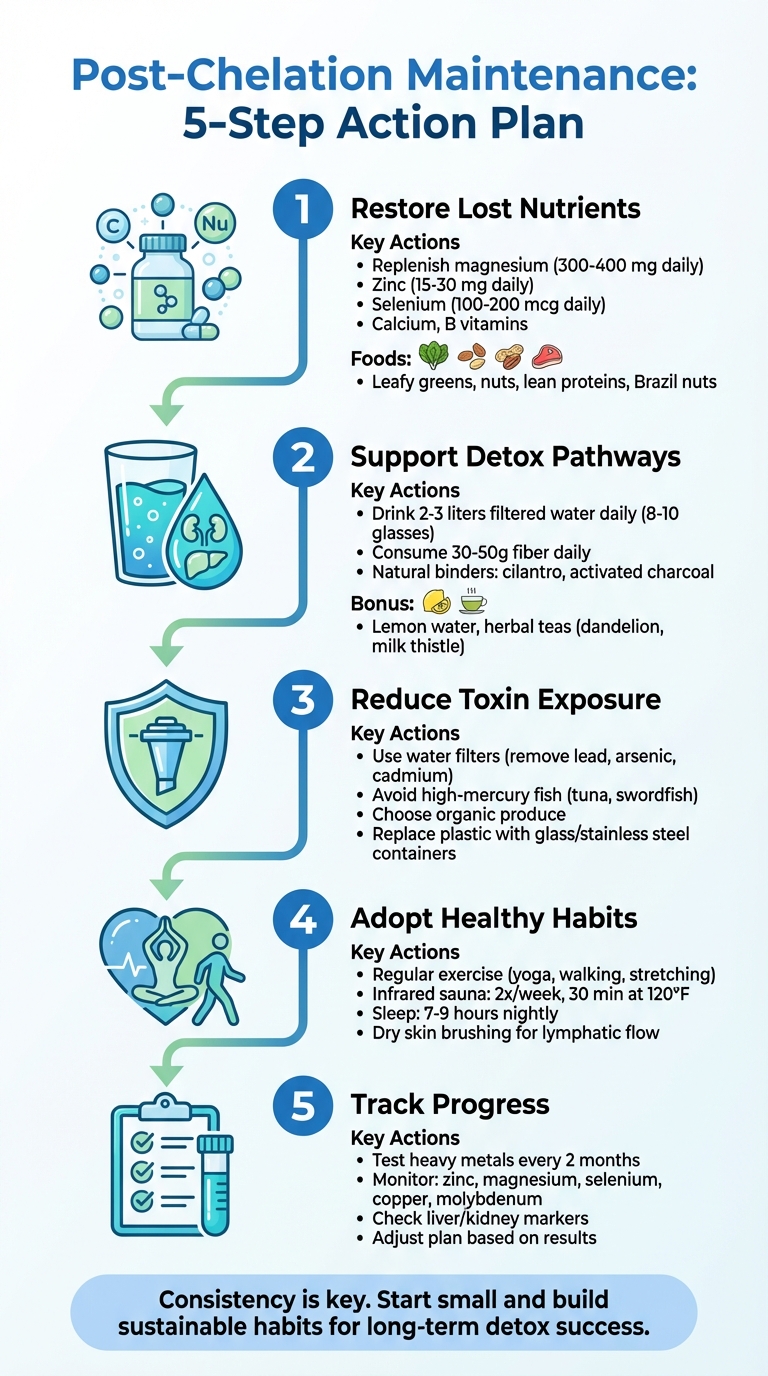
5-Step Post-Chelation Maintenance Plan for Long-Term Health
Restoring Lost Nutrients
Chelation therapy is a double-edged sword. While it helps remove harmful toxins from the body, it also depletes essential minerals like calcium, magnesium, and zinc. These minerals are critical for maintaining healthy metabolic functions and supporting the liver's detoxification pathways. Without them, your body’s ability to process and eliminate toxins can falter.
"Chelating drugs can bind to and remove some metals your body needs, such as calcium, copper, and zinc. This can lead to a deficiency in these important substances." - Clarissa Brincat
When these nutrients are depleted, the effects can go beyond just feeling tired. Your detox process can slow down or even come to a halt, leading to what’s known as "detox crashes." This happens when toxins that have been mobilized overwhelm your system because the liver lacks the necessary nutrients to process them. To avoid this, ensuring your body gets the right nutrients is crucial. Below, we'll dive into the key nutrients to replenish, foods that help restore balance, and supplements that aid recovery.
Nutrients That Need Replenishment
Several nutrients play a pivotal role in restoring balance after chelation therapy:
- Magnesium: Vital for over 300 metabolic enzymes, it helps prevent detox crashes.
- Copper: Supports enzymatic reactions and overall metabolic health.
- Zinc: Boosts immune function and acts as a cofactor for detox enzymes.
- Calcium: Essential for bone strength and nerve health, which can be compromised during chelation.
- Selenium: The liver uses this mineral to produce glutathione, a powerful antioxidant that helps neutralize toxins. Mercury toxicity can further reduce selenium levels.
- B vitamins: Especially B6, B12, and folate, these vitamins support the liver’s detox pathways, helping it break down and eliminate toxins efficiently.
For daily replenishment, aim for 15–30 mg of zinc, 300–400 mg of magnesium, and 100–200 mcg of selenium.
Foods That Restore Nutrient Balance
The right foods can help replenish essential nutrients naturally:
- Leafy greens: Spinach and kale are rich in magnesium and calcium, and their nutrients are easily absorbed.
- Nuts and seeds: Brazil nuts are an excellent source of selenium (just two a day can meet your needs), while pumpkin seeds provide zinc.
- Lean proteins: Wild-caught salmon, sardines, and grass-fed beef supply zinc and omega-3 fatty acids, which help counteract inflammation caused by toxin mobilization.
- Sulfur-rich vegetables: Garlic, onions, and cruciferous veggies like broccoli and cauliflower support glutathione production in the liver.
- Fiber-rich foods: Avocados, lentils, and chia seeds provide fiber (aim for 30–50 g daily) to bind metals in the digestive tract and reduce reabsorption.
- Pectin-rich fruits: Green apples, pears, and citrus fruits enhance heavy metal excretion through stool.
- Whole grains and pomegranates: These contain natural chelating agents that help maintain mineral balance without requiring aggressive supplementation.
By incorporating these foods into your diet, you can naturally support your body’s recovery and detoxification.
Supplements That Support Recovery
While a nutrient-dense diet is the foundation, supplements can speed up the recovery process:
- N-Acetylcysteine (NAC): Known for boosting glutathione levels more effectively than direct glutathione supplements, NAC is typically taken in doses of 600–1,800 mg daily.
- TUDCA (Tauroursodeoxycholic Acid): When paired with NAC, TUDCA provides comprehensive liver support during detox. Mahoney Supplements' TUDCA & NAC formula ($92.00) combines these compounds to aid liver detox, reduce detox symptoms, and support recovery.
- Methylated B vitamins: These forms of B vitamins, such as B17 ($102.95), ensure that your liver can complete its detox cycles. Vitamin B12 ($25.00) can also help boost energy during recovery. Start with small doses (1/4 to 1/2 of the recommended amount) and gradually increase to avoid triggering inflammation or rapid toxin release.
To fine-tune your recovery, consider testing your mineral levels every two months. This can help identify specific deficiencies, like low molybdenum or other trace minerals, so you can adjust your supplementation plan as needed.
Lifestyle Changes for Continued Health
Once you've replenished essential nutrients, maintaining healthy daily habits becomes crucial to avoid reintroducing toxins into your system. Detoxification is only part of the journey - keeping toxins at bay through mindful choices ensures the progress you've made isn’t undone. While restoring nutrients addresses imbalances, your everyday environment and routines play a key role in safeguarding that balance for the long haul.
Staying Hydrated and Supporting Detox
Your kidneys rely on consistent hydration to filter waste and deliver nutrients through open blood vessels. Post-detox, aim to drink 8–10 glasses (2–3 liters) of filtered water daily. Sipping water every couple of hours helps your body continue flushing out toxins effectively.
Consider enhancing your water with a squeeze of lemon. It provides vitamin C, which acts as an antioxidant to combat damage caused by heavy metals. Herbal teas, such as dandelion or milk thistle, are another great option, as they support liver and kidney function, helping your body manage toxins without overloading your system.
Another way to aid detox is through sweat. Practices like infrared sauna sessions and dry skin brushing can stimulate lymphatic flow and encourage toxin elimination. Since a significant portion of your immune cells resides in your gut, improving lymphatic drainage not only bolsters detox but also strengthens your immune system.
Reducing Exposure to Toxins
Even after chelation therapy, exposure to everyday toxins can slowly rebuild harmful levels in your body. Start with your water - tap water may contain trace amounts of heavy metals like lead, arsenic, and cadmium. A high-quality filter, such as a stainless steel Berkey system, can effectively remove these contaminants, reducing re-exposure from drinking water and even coffee.
Switching to glass or stainless steel containers instead of plastic or aluminum can also minimize toxin contact. When shopping for food, opt for organic produce to avoid pesticides and industrial soil toxins like thallium.
Be mindful of your seafood choices. High-mercury fish, such as tuna and swordfish, should be limited. Instead, go for options like wild-caught salmon, sardines, clams, or oysters. For an extra detox boost, let chopped garlic sit for about 10 minutes before cooking. This activates sulfur compounds, which help your liver process toxins like lead and arsenic, further supporting your ongoing detox efforts.
Exercise and Physical Activity
Regular movement is key to keeping your detox pathways open. The lymphatic system, which transports waste and toxins away from tissues, relies entirely on physical activity since it lacks its own pump like the heart. Without movement, the system can’t do its job effectively.
Low-impact exercises are particularly beneficial during the maintenance phase. Activities like yoga, walking, and stretching encourage lymph flow without putting undue stress on your body. These exercises also help reduce stress, which is important because chronic stress can deplete glutathione peroxidase - a crucial enzyme for detoxification.
Pair these activities with 7–9 hours of quality sleep to ensure your body’s natural detox processes stay efficient. This balanced approach supports long-term health and helps you maintain the benefits of your chelation therapy without needing aggressive interventions.
sbb-itb-9616115
Tracking Your Health Progress
After completing chelation therapy, it’s crucial to maintain a routine that supports your recovery and prevents toxins from building up again. Think of chelation as the start of a longer journey - regular monitoring and consistent habits help your body stay on track as it adjusts.
Regular Testing and Health Checkups
Testing every two months can give you a clear picture of how your detox process is progressing. Dr. John Salerno, Founder of Salerno Wellness, shares his personal routine:
"Personally, I do this every two months by way of a spot urine test, or 'pre-challenge test.' This helps me to keep track of the heavy metals in my body, so they don't accumulate and cause harm to my health."
Focus on testing for heavy metals like lead, mercury, cadmium, and arsenic, as well as essential minerals such as zinc, magnesium, copper, selenium, and molybdenum. It’s also important to check liver and kidney markers, including hepatic transaminases, creatinine, and BUN, to ensure your organs are recovering properly.
For accurate results, avoid seafood for 48 hours and imaging contrasts for 96 hours before testing. These tests provide insights into your body’s detox status and help you adjust your health routine for continued progress.
Building a Daily Health Routine
Your test results can guide you in creating a daily routine that keeps your detox pathways functioning smoothly. The key here is consistency, not perfection. Start with hydration - drinking 2–3 liters of filtered water daily helps your kidneys flush out any lingering toxins.
Fiber is another essential piece of the puzzle. Aim for 30–50 grams per day from plant-based foods to aid in binding metals in your digestive tract, preventing them from being reabsorbed. Adding natural binders like cilantro to your morning smoothie or taking activated charcoal between meals can also help trap circulating toxins.
Incorporate a 30-minute infrared sauna session twice a week at 120°F, followed by a cold shower to close your pores. This routine supports lymphatic drainage and keeps detox pathways open.
On your rest days, replenish essential nutrients that might have been depleted during chelation. Supplements like magnesium, vitamin C, and a multi-mineral blend can help restore balance without disrupting the detox process. Keep a journal to track any changes - whether it’s brain fog, fatigue, or skin issues - and use these observations alongside your test results to get a full picture of your progress.
Conclusion
Maintaining Health Long-Term
Detoxification is not a one-time event - it's an ongoing process. With toxins constantly entering our lives through air, water, food, and everyday products, it's important to stay proactive in maintaining the benefits of chelation.
To support long-term health, focus on three key areas: replenishing vital minerals like zinc, magnesium, and selenium; promoting healthy liver and kidney function; and minimizing exposure to heavy metals in your daily environment. As Dr. John Salerno explains:
"Think of the chelation process as a deep cleaning and the dietary and lifestyle recommendations mentioned here as tools you can use when you need a tune-up or a little extra support."
Simple habits like staying hydrated, eating fiber-rich foods, and using natural binders can prevent toxins from being reabsorbed. Including sulfur-rich foods in your diet can also enhance glutathione production, which plays a vital role in detoxification. To keep track of your progress, consider testing your metal levels every couple of months.
Getting Started
Turning these principles into daily habits doesn’t have to be overwhelming. Start small - maybe by drinking more water or adding more fiber to your meals - and gradually build from there. Consistency is far more important than striving for perfection.
For those seeking additional support, products like TUDCA and NAC from Mahoney Supplements can be helpful. These supplements are designed to aid liver detoxification and ease symptoms that may arise during the process. Combined with diet and lifestyle adjustments, they can provide your body with the tools it needs to maintain health over the long haul. Keep your detox pathways clear, maintain balanced nutrition, and work to reduce your overall toxin exposure.
FAQs
What’s the best way to restore essential minerals after chelation therapy?
To replenish minerals after chelation therapy, it's important to stay hydrated and include nutrient-dense foods in your meals. Some excellent choices are coconut water, milk, yogurt, leafy greens, avocado, potatoes, and salmon. These foods naturally provide the vital minerals your body craves.
You might also explore high-quality mineral supplements or targeted IV therapies for extra support. For example, Mahoney Supplements offers natural options designed to help maintain balance and support overall well-being. Be sure to consult your healthcare provider to find the best plan tailored to your needs.
What are the key lifestyle changes to maintain health after chelation therapy?
Maintaining your health after chelation therapy means taking steps to minimize heavy metal exposure and helping your body’s natural detox processes work efficiently. Start by steering clear of common heavy metal sources - drink filtered water, choose stainless steel or glass cookware, and cut back on processed foods.
A fiber-packed diet can also play a big role in clearing out lingering metals. Focus on whole grains, fruits, vegetables, and beans to get the fiber you need. Foods like cilantro, garlic, chlorella, and spirulina are often recommended for their potential detox-supporting properties.
Staying hydrated is crucial - aim for 64–96 ounces of water each day. Pair that with regular moderate exercise, like walking or cycling, and make sure you’re getting 7–9 hours of quality sleep each night. To give your liver and kidneys a little extra help, some people turn to natural supplements like TUDCA or NAC. Brands like Mahoney Supplements even offer products specifically designed to support detox efforts and overall wellness.
By combining these habits with regular check-ins on your health, you can work toward maintaining long-term wellness after chelation therapy.
How often should I check my heavy metal and mineral levels after chelation therapy?
To keep track of your heavy metal and mineral levels, it's suggested to test about every two months. Use a pre-challenge urine or blood sample (non-provoked), and ensure the sample is taken at least 3–5 days after your last chelation session. This timing helps provide accurate results and allows you to monitor your progress effectively.