

Panchakarma for Liver Detox
Panchakarma is an ancient Ayurvedic detox therapy designed to cleanse the liver and body by removing deep-seated toxins, particularly fat-soluble ones like pesticides and heavy metals. Unlike standard detox methods, Panchakarma focuses on restoring balance to the body while enhancing liver function through specialized treatments.
Key Takeaways:
- What It Does: Removes toxins stored in fat tissues, clears digestive residue (Ama), and supports liver health.
- Core Therapy: Virechana - a purgation method targeting bile and liver toxins.
-
Process:
- Preparation Phase: Medicated ghee and steam therapy to mobilize toxins.
- Detox Phase: Herbal laxatives flush out toxins.
- Recovery Phase: Gradual reintroduction of food and liver-friendly herbs.
- Cost: A typical 7-day program costs around $1,500.
By combining therapies like oleation, purgation, and herbal support, Panchakarma offers a structured approach to liver detox while promoting overall well-being.
How Panchakarma and Liver Function Work Together
Building on the basics of Panchakarma, understanding how the liver operates sheds light on how this therapy helps restore balance and detoxify the body.
The Liver’s Role in Detoxification
The liver acts as the body’s natural filter, removing toxins like alcohol, medications, and environmental pollutants from the bloodstream. It also produces bile, which is essential for breaking down fats and eliminating waste. Beyond that, it converts nutrients into energy, stores vital vitamins and minerals, and regulates blood sugar levels.
When the liver is overwhelmed by an excess of toxins, it can lead to sluggish digestion, fatigue, skin problems, and metabolic issues. Fat-soluble toxins, such as pesticides like DDT, heavy metals, and dioxins, often get stored in fat tissue, making them particularly tough to remove through standard detox methods.
Panchakarma’s Role in Liver Cleansing
Panchakarma aids liver detoxification by addressing both Ama (toxic residue) and imbalances in the Pitta dosha. In Ayurveda, the liver and gallbladder are considered key centers of Pitta, the energy that governs digestion, metabolism, and transformation. When Pitta becomes unbalanced, it can trigger excessive bile production and inflammation, compromising the liver’s ability to detoxify effectively.
This therapy incorporates medicated ghee to bind with fat-soluble toxins stored in fat tissues. During the preparation phase (Purva Karma), two specific treatments - Snehana (oleation therapy) and Swedana (herbal steam) - work together to liquefy Ama and draw it out from deep tissues into the digestive tract.
Following this preparation, Virechana (therapeutic purgation) focuses on clearing excess Pitta and bile from the liver, gallbladder, and intestines. This step clears the pathways, reignites the digestive fire (Agni), and enables the liver to efficiently process nutrients while filtering out waste. By viewing the liver as part of an interconnected system, Panchakarma promotes detoxification through improved gut health, better fat metabolism, and proper lymphatic function.
The Panchakarma Process for Liver Detox
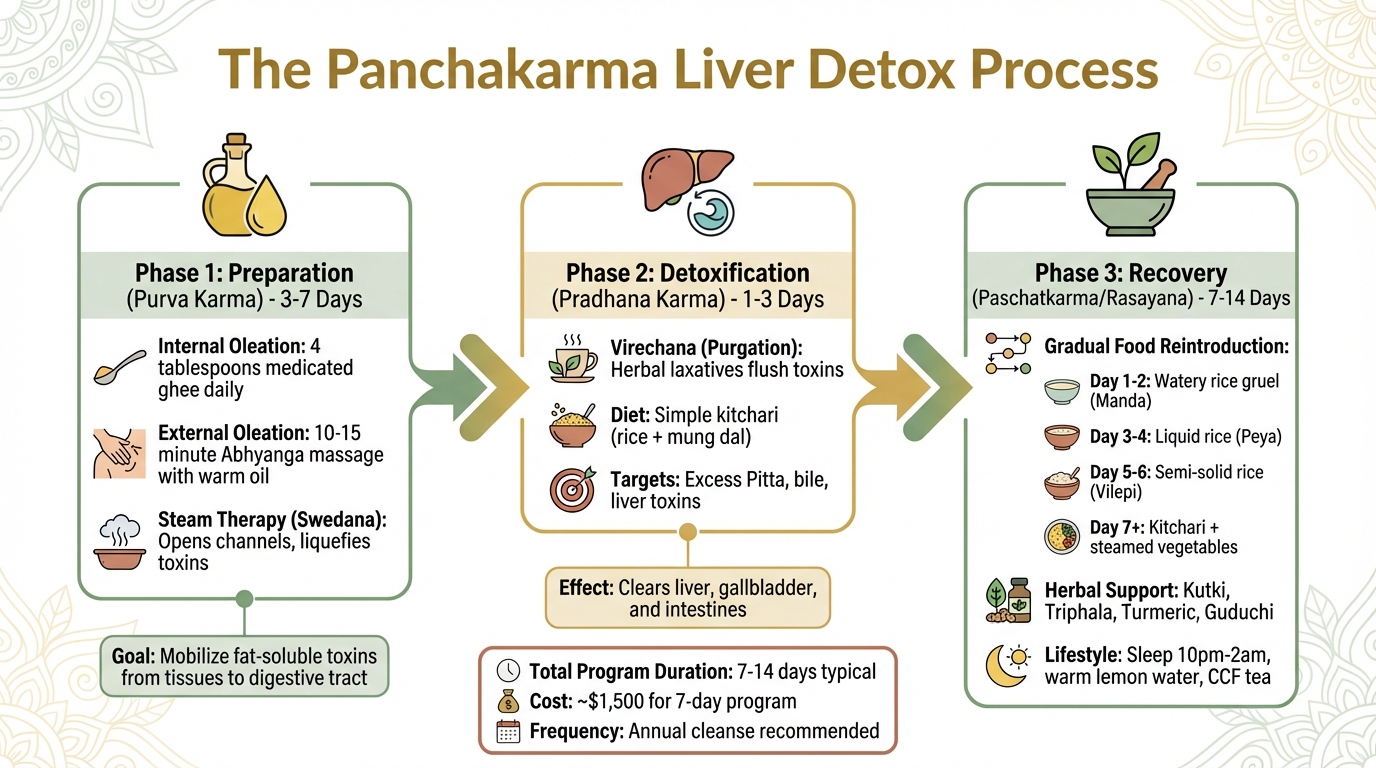
Panchakarma Liver Detox: 3-Phase Process and Timeline
Panchakarma follows a structured three-phase approach - preparation, detoxification, and recovery - to help the body eliminate toxins from the liver. Here’s a closer look at how each phase contributes to this cleansing process.
Preparation Phase: Snehana and Swedana
The first step, known as Purva Karma, focuses on preparing the body for detoxification through two key therapies.
- Internal Oleation: This involves consuming 4 tablespoons of warm, medicated ghee daily for 3–7 days. The ghee acts as a fat-loving agent, binding to fat-soluble toxins like pesticides and heavy metals stored in fat tissue. It also stimulates bile production, which aids in breaking down fats and processing waste.
- External Oleation and Steam Therapy: Abhyanga, a full-body massage using warm sesame or coconut oil, is performed for 10–15 minutes. Afterward, Swedana (steam therapy) helps open the body’s channels and liquefies toxins, moving them toward the gastrointestinal tract for removal. As Julie Bernier, a Registered Ayurvedic Practitioner, puts it: "Just as juice can't be squeezed from an unripe mango, toxins can't be squeezed from an un-primed body." Without this preparation, toxins could remain locked in the tissues.
Virechana: The Core Liver Detox Therapy
The main detox phase, called Pradhana Karma, centers on Virechana, a therapy designed to cleanse the liver and gallbladder. Using herbal laxatives, Virechana draws water and waste into the intestines, flushing out Pitta toxins and excess bile.
This method is particularly useful for addressing issues like jaundice, biliary congestion, and skin inflammation, as it clears pathways vital for liver health. Dr. Bhavya from Nirva Health explains, "Virechana helps to detoxify the liver, gallbladder, and intestines and promotes healthy digestion." During this phase, patients typically eat a simple mono-diet of kitchari (a mix of rice and mung dal), which nourishes the body while giving the digestive system a break.
Additional Therapies for Comprehensive Detox
While Virechana directly targets liver detox, other therapies work to enhance overall purification:
- Vamana (Therapeutic Emesis): Clears Kapha-related toxins and mucus from the upper respiratory and digestive tracts.
- Raktamokshana (Bloodletting): Removes toxins from the bloodstream and is especially helpful for conditions like an enlarged liver or spleen.
- Basti (Medicated Enemas): Balances Vata in the colon and supports metabolism.
- Nasya (Nasal Therapy): Clears toxins from the head and sinus areas.
Together, these therapies create a holistic detox process that not only cleanses the liver but also restores balance throughout the entire body.
Recovery and Rebuilding After Panchakarma
Once you've completed the intense cleansing of Panchakarma, your body transitions into what Ayurveda calls the Rasayana phase, or rejuvenation. While toxins are flushed out, your digestive fire (Agni) may still be weak and needs careful rebuilding. This recovery stage is just as important as the detox itself. Food must be reintroduced slowly and thoughtfully. Following the practice of Samsarjana Karma, start with watery rice gruel (Manda), then move to liquid rice (Peya), followed by semi-solid rice (Vilepi), and finally incorporate kitchari and steamed vegetables. This gradual progression ensures your digestive system regains its strength without being overburdened. Additionally, specific herbs and lifestyle adjustments can help restore liver health and overall vitality.
Herbs for Liver Recovery
Ayurvedic herbs play a key role in repairing and strengthening the liver after cleansing. One herb that stands out is Kutki (Picrorhiza kurroa). As Karma Ayurveda explains:
"Kutki (Picrorhiza kurroa): Known as the king of liver herbs, Kutki helps detoxify and protect the liver. It's cooling, bitter, and works well to balance Pitta."
In addition to Kutki, consider these herbs for targeted liver support:
- Kalmegh and Guduchi: Ideal for purification and tissue restoration.
- Bhumyamalaki: Beneficial for chronic liver conditions like hepatitis or fatty liver.
- Triphala: A gentle detoxifier that also supports regular bowel movements. For best results, drink it as a tea before bed.
- Turmeric: Offers anti-inflammatory and liver-protective benefits.
These herbs work together to aid recovery and maintain liver health in the long term.
Lifestyle Changes for Long-Term Liver Health
Beyond herbs, your daily habits play a critical role in supporting liver recovery and overall well-being. The liver performs most of its repair between 10:00 PM and 2:00 AM, so getting quality sleep during this time is essential. Start your mornings with warm water and lemon to stimulate digestion and continue the detox process. Throughout the day, sip herbal teas made from cumin, coriander, and fennel (½ teaspoon of each steeped in hot water) to support digestion and reduce inflammation.
Adopt a Pitta-reducing diet to keep your liver balanced. Focus on cooling, bitter, and astringent foods like leafy greens, beets, pomegranate, and amla (Indian gooseberry). Avoid heating foods such as spicy, greasy, or fried items, as well as alcohol, refined sugars, and preservatives. These dietary choices help prevent Pitta aggravation and protect the liver.
Incorporate Abhyanga (warm oil massage) into your routine to balance doshas and promote lymphatic drainage. Stress management is equally important. Practices like Sheetali Pranayama (cooling breath) and Nadi Shodhana (alternate nostril breathing) can calm fiery Pitta energy, which is closely tied to liver health. Since the liver is associated with intense emotions like anger and frustration in Ayurveda, meditation can also help release these emotional toxins and promote inner peace.
sbb-itb-9616115
Benefits of Panchakarma for Liver Detox
Panchakarma offers a deep and effective approach to liver detoxification, going well beyond basic cleansing. One key aspect is internal oleation with medicated ghee, which stimulates bile release. This process not only aids in breaking down fats but also helps flush out toxins, addressing various layers of liver dysfunction. From clearing metabolic waste to calming chronic inflammation, Panchakarma supports the liver’s natural ability to regenerate and heal.
This ancient therapy doesn’t stop at detoxifying fat-soluble toxins - it also revitalizes digestive health. By removing ama (toxic buildup) and restoring Agni (digestive fire), Panchakarma resolves common digestive troubles like bloating, gas, and constipation. Specific treatments, such as Virechana, target excess Pitta and clear liver blockages, improving fat metabolism. For those dealing with fatty liver - a condition affecting around 25% of Americans - this method helps eliminate fat from liver cells while promoting tissue repair. The result? Better digestion, more energy, and sharper mental clarity.
As toxins are released, many people notice a surge in energy and a clearer mind. Panchakarma not only detoxifies but also stabilizes the nervous system, addressing the mental fog and emotional imbalance caused by toxic buildup. After treatment, individuals often describe feeling lighter, more focused, and emotionally grounded. It’s a comprehensive way to purify the body and rebuild inner resilience, making it especially valuable for managing chronic health conditions.
When it comes to chronic inflammation, Panchakarma excels by reducing excess Pitta dosha, which is closely linked to liver inflammation. Therapies like Raktamokshana (blood purification) further enhance anti-inflammatory effects, easing the liver's workload and promoting overall health.
Using Mahoney Supplements for Liver Support
Panchakarma lays the groundwork for liver detoxification, while supplements can enhance the process by aiding toxin removal and promoting cellular recovery. Mahoney Supplements offers specialized formulas designed to work alongside Ayurvedic therapies, helping your liver handle the added demands during and after cleansing. Let’s dive into how these formulas integrate with Panchakarma to support liver health.
TUDCA & NAC for Liver Detox
Mahoney Supplements’ TUDCA & NAC formula combines two well-researched compounds. TUDCA (Tauroursodeoxycholic acid) is a bile acid that improves bile flow and protects liver cells from damage caused by bile toxins. NAC (N-Acetyl Cysteine) serves as a precursor to glutathione, the body’s key antioxidant, which is crucial for neutralizing toxins during detoxification. Together, they align perfectly with Panchakarma’s cleansing goals.
"TUDCA's multifaceted approach not only protects liver cells from damage but also supports the liver's regenerative capacity, making it a valuable ally in maintaining liver health." - Onpharno
This formula is especially beneficial during the Paschatkarma (post-treatment) phase, when the liver focuses on regenerating cells and normalizing enzyme levels. Research suggests TUDCA can significantly improve liver enzyme profiles in individuals with impaired bile flow. For best results, take these supplements either in the morning or before bed to align with the liver’s natural repair cycles. Drinking 3–4 quarts of purified water daily is also recommended to help flush out toxins released during this process.
How Panchakarma and Supplements Work Together
When combined, Panchakarma and supplements create a powerful synergy for liver detoxification. Panchakarma, through therapies like Virechana, removes toxins from the body, while TUDCA and NAC enhance bile flow and replenish vital antioxidants. As Panchakarma mobilizes deep-seated toxins, NAC boosts glutathione levels to neutralize these harmful substances. This partnership helps stabilize liver cell membranes and maintain optimal liver function during the intense detox phase.
Timing is key: Begin introducing liver support supplements gradually during the recovery phase rather than during active Virechana, when digestive strength (Agni) is lower. Pair supplements with light meals containing healthy fats, and avoid alcohol and caffeinated drinks. A supplement cycle of 6–8 weeks is ideal for those undergoing deep Ayurvedic cleansing, offering sustained support as the liver rebuilds and strengthens.
Conclusion
Panchakarma stands out by addressing fat-soluble toxins that other cleanses tend to miss. With therapies like Virechana and the use of medicated ghee, this ancient system helps dislodge pollutants, heavy metals, and pesticides that have built up in the body over time. By eliminating Ama and boosting Agni, it eases the strain on your liver, allowing it to function more effectively.
But the benefits don’t stop with the cleanse. To keep your liver in top shape, it’s essential to adopt supportive lifestyle habits. Slowly reintroduce wholesome, nutrient-rich foods, prioritize quality sleep, manage stress, and consider supplements that support liver health. These steps help ensure your liver stays strong and continues to perform its vital detoxification role.
For long-term liver health, consider undergoing a full Panchakarma cleanse annually. Between cleanses, you can maintain your liver’s resilience by eating organic foods, minimizing alcohol intake, adding liver-friendly ingredients like turmeric and beetroot to your diet, and staying active to encourage toxin release through sweat. By integrating these practices, Panchakarma evolves from a one-time detox into a long-term strategy for keeping your liver healthy and efficient for years to come.
FAQs
How does Panchakarma support liver detoxification?
Panchakarma therapy is an Ayurvedic method that supports liver detoxification. It works by improving digestion, boosting metabolism, and reducing fat accumulation in the liver. Additionally, it stimulates the gallbladder, helping the body eliminate toxins. This process also removes ama (internal toxins), which can enhance liver function and contribute to better overall health.
For extra liver support, natural supplements such as TUDCA and NAC can be useful. These supplements work alongside detox practices by promoting liver health and aiding the body's natural cleansing abilities.
What makes Panchakarma different from other detox methods?
Panchakarma is a time-honored Ayurvedic detox program designed to cleanse the body in a holistic, three-phase process. It’s tailored to an individual’s unique dosha (body constitution) and digestive health, aiming to eliminate internal toxins, known as ama, through a variety of therapies. These include medicated oils, specific dietary preparations, and treatments such as:
- Vamana: Therapeutic vomiting to clear excess mucus.
- Virechana: Purgation to cleanse the digestive tract.
- Basti: Herbal enemas to detoxify the colon.
- Nasya: Nasal therapy to clear the sinuses and improve mental clarity.
- Raktamoksha: Bloodletting to purify the blood.
Unlike many modern detox methods, Panchakarma doesn’t just focus on a single organ - it works on the entire system, including the liver, gut, and even the mind.
How It Differs from Western Detox Methods
Western detox practices, like juice cleanses or supplement-based regimens, often zero in on the liver. While they may seem effective, they can sometimes burden the liver further by introducing additional substances for it to process. These approaches also tend to lack the preparatory steps and personalized care that are central to Panchakarma. By contrast, Panchakarma offers a deeply restorative, whole-body approach that works on multiple levels to rejuvenate the body.
Supporting Liver Health with Supplements
For those seeking added support for liver health, products like TUDCA and NAC, offered by Mahoney Supplements, can be helpful. These supplements are designed to assist liver function. However, Panchakarma goes beyond isolated liver detoxification, providing a more extensive and balanced cleansing experience that addresses the entire body and mind.
What can I expect during recovery after Panchakarma therapy?
After undergoing Panchakarma therapy, your body enters a delicate, detoxified state, making recovery all about rest and easing back into your usual routine. Gentle activities like walking, meditating, or practicing light breathing exercises are ideal during this time. It's important to steer clear of strenuous physical or mental exertion for a few days to allow your body to fully recuperate.
What you eat during recovery is just as important. Begin with simple, easy-to-digest options like cooked vegetables, clear broths, and soft grains such as rice or quinoa. As your digestion stabilizes, slowly reintroduce whole foods like fresh fruits, vegetables, legumes, and lean proteins. Pay close attention to how your body reacts and, over time, shift toward a balanced diet that aligns with your Ayurvedic constitution. Make sure to include all six tastes - sweet, sour, salty, bitter, pungent, and astringent - in moderate amounts for a well-rounded approach.
As you follow these steps, you might notice your digestion improving, your mind feeling clearer, and an overall sense of calm settling in. These practices not only help solidify the detoxification benefits but also aid your liver in its natural healing process.