

14-Day Ayurvedic Detox Plan: Daily Routine Guide
This 14-day Ayurvedic detox is designed to cleanse your body, improve digestion, and boost energy without extreme restrictions. By following a structured plan rooted in Ayurveda, you’ll focus on eliminating toxins, balancing your system, and building lasting habits.
Key Highlights:
- Detox Phases: Loosen toxins, eliminate them, and reintroduce foods gradually.
- Daily Routine: Morning rituals include tongue scraping, warm water, oil pulling, light exercise, and meditation.
- Diet: Centered around kitchari, a simple, nourishing dish with rice, mung dal, and spices.
- Self-Care: Oil massages, herbal teas, and Triphala support cleansing and digestion.
- Post-Detox: Gradually reintroduce foods while maintaining Ayurvedic practices.
This plan prioritizes gentle, natural methods to reset your system and promote overall well-being. Let’s dive into the details.
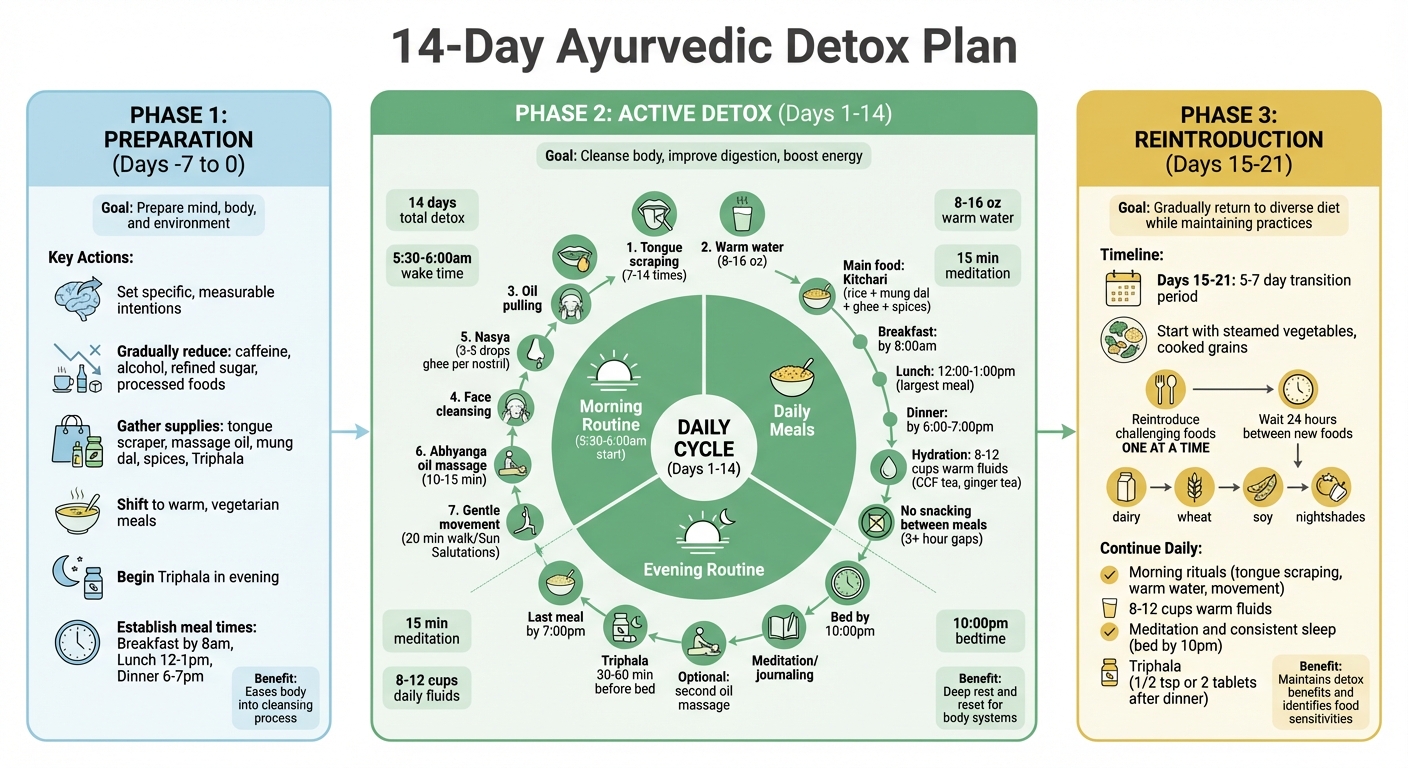
14-Day Ayurvedic Detox Daily Routine and Timeline
Preparing for Your Detox
Getting ready for a detox involves more than just following a plan - it’s about preparing your mind, body, and environment to support the process effectively.
Setting Your Intentions
Start by asking yourself: What habits or triggers do I want to address? Be specific about your goals. Instead of vague aims like "feeling better", set measurable objectives such as "reducing bloating", "waking up with more energy", or "improving digestion." Writing these goals in a journal can help solidify them, turning abstract ideas into actionable targets.
"Preparation is actually the most important part of an Ayurvedic detox program. To prepare your body for detoxification, you must first balance your agni, or digestive fire, by following a basic detox diet." – Maharishi Ayurveda
To stay motivated, share your goals with someone you trust - a friend or family member who can offer support and hold you accountable. Research shows that clearly defined goals are key to successful behavior changes. Plan your detox during a period with minimal stress. Avoid scheduling it during demanding work deadlines or big family events to give yourself the best chance of success.
Gathering Your Supplies
Having the right tools and ingredients on hand will make your detox smoother. For oral hygiene, get a tongue scraper to remove ama (toxins) from your tongue each morning. For self-care, stock up on massage oil - sesame oil works well for most, while sunflower oil is better if you tend to feel overheated.
Plan your meals around kitchari, a nourishing mix of white basmati rice, split yellow mung dal, and ghee. Soak the mung dal for at least four hours before cooking to make it easier to digest. Essential spices include cumin, coriander, fennel (for CCF tea), turmeric, fresh ginger, black mustard seeds, and hing.
For herbal support, Triphala is the go-to supplement during detox. Keep a thermos handy for sipping hot water or herbal teas throughout the day to stay hydrated and support digestion.
Transitioning Your Diet
Start adjusting your diet about a week before your detox to ease into the process and avoid withdrawal symptoms. Gradually cut back on caffeine, alcohol, refined sugar, and processed foods. Quitting these abruptly on day one can lead to headaches or fatigue, making the detox harder to stick with.
Shift toward warm, easy-to-digest vegetarian meals like soups, lentils, and cooked vegetables. Replace heavy proteins like red meat with lighter options such as mung dal or chickpeas. Swap cold beverages for hot water or ginger tea to help your body start eliminating toxins. Begin taking Triphala in the evening to support regular digestion and elimination.
Avoid foods that are heavy or hard to digest, like rich dairy products (cheese, whole yogurt), fried foods, raw vegetables, and leftovers. Choose organic produce when possible to minimize exposure to pesticides and chemicals. Stick to consistent meal times: breakfast by 8:00 a.m., lunch around 12:00–1:00 p.m., and dinner by 6:00–7:00 p.m. If you’re eating fruit, cook it instead of eating it raw - try stewed apples, pears, or prunes for a gentle start to your day.
Once you’ve set your goals, gathered your supplies, and adjusted your diet, you’ll be well-prepared to dive into your 14-day detox journey.
Daily Routine Guide: Days 1–14
Over the next two weeks, you’ll follow a structured daily routine designed to help your body’s natural detox processes. This rhythm builds on the preparation phase and ensures you maintain energy and mental clarity throughout.
Morning Practices
Start your day early, ideally between 5:30 and 6:00 a.m., to align with the natural rhythm of the day. Your morning routine includes several practices to promote detoxification and balance:
- Tongue scraping: Use a copper or stainless steel scraper to gently scrape your tongue 7–14 times, removing bacteria and aiding digestion.
- Warm water: Drink 8–16 ounces to flush your kidneys and kickstart elimination.
- Oil pulling: Swish warm sesame oil in your mouth until it feels full, then spit it out. This strengthens teeth and helps draw out toxins.
- Face cleansing: Rinse your face with cool water to refresh and wake up your skin.
- Nasya: Apply 3–5 drops of warm ghee in each nostril to clear your sinuses and enhance mental clarity.
- Abhyanga (oil massage): Massage your body with warm oil (sesame for Vata, sunflower or coconut for Pitta, and sunflower or mustard for Kapha). Let the oil soak in for 10–15 minutes before bathing to draw out toxins from deeper tissues.
- Gentle movement: Engage in light exercise like Sun Salutations, a 20-minute walk, or Tai Chi. Stop when you notice sweat forming on your forehead, armpits, and spine.
- Pranayama and meditation: Conclude your morning routine with 15 minutes of deep breathing and meditation to calm your mind and cleanse your respiratory system.
"A daily routine is absolutely necessary to bring radical change in body, mind, and consciousness. Routine helps to establish balance in one's constitution." – Vasant Lad, BAM&S, MASc, Ayurveda Institute
This mindful start sets the tone for the rest of your day, preparing you for nourishing meals and detox-friendly practices.
Meals and Dietary Guidelines
Throughout the 14 days, kitchari will be your main meal. This simple dish combines white basmati rice and split yellow mung dal, cooked with ghee and spices. It’s easy on digestion and provides the nutrients your body needs while giving your digestive system a break.
"Kitchari is very easy to digest, which makes it a wonderful food for any cleansing regimen. It allows the digestive system to rest, allocating extra energy to the body's natural detoxification processes." – Banyan Botanicals
To prepare kitchari, sauté mustard seeds, cumin, turmeric, coriander, fennel, and fresh ginger in ghee before adding the rice, dal, and water. Stick to three meals a day at consistent times:
- Breakfast: By 8:00 a.m.
- Lunch: Between 12:00–1:00 p.m. (this should be your largest meal)
- Dinner: By 6:00–7:00 p.m.
Space your meals at least three hours apart and avoid snacking. Only eat when you feel genuine hunger, which signals that your previous meal has been fully digested.
Stay hydrated by sipping 8–12 cups of warm fluids daily. CCF tea (made with cumin, coriander, and fennel seeds) is particularly supportive for detoxification. Ginger tea, made with one teaspoon of fresh grated ginger in hot water, can also help mobilize toxins and curb cravings. These dietary practices complement your morning and evening routines, reinforcing the cleansing process.
| Practice | Timing | Primary Benefit |
|---|---|---|
| Tongue Scraping | Upon waking | Removes bacteria and stimulates digestion |
| Hot Water Intake | First thing, 8–16 oz | Flushes kidneys and promotes elimination |
| Abhyanga (Oil Massage) | Before bathing | Loosens toxins from deep tissues |
| Meditation | Morning, 15+ minutes | Balances mind and reduces stress |
Evening Wind-Down Routine
As evening approaches, shift your focus to relaxation and restoration. Finish your last meal by 7:00 p.m. to allow your digestive system to rest overnight, giving your body the energy it needs for detox and repair.
"Sleep is the body's best time to detox so be sure to get plenty of rest throughout the cleanse." – Banyan Botanicals
Take Triphala 30–60 minutes before bedtime to support healthy bowel movements. If you’d like extra relaxation, consider a second oil massage before bed. This practice can promote deeper sleep and keep your skin nourished during the cleanse.
Spend a few minutes meditating or journaling in the evening to process any emotions that may arise during the detox. Aim to be in bed by 10:00 p.m. Staying up late can interfere with your body’s repair processes and may even lead to the accumulation of toxins.
Ayurvedic Detox Practices and Therapies
In addition to your daily habits, specialized Ayurvedic therapies can help speed up the process of eliminating toxins. These treatments complement your routine to boost the overall effectiveness of your detox.
Self-Care Practices
An oil massage, or Abhyanga, does more than just relax your muscles - it also helps draw toxins out from deep within your tissues, preparing them for elimination.
Following Abhyanga with Svedana (steam therapy) takes the detox process further. After your massage, a hot shower or steam bath helps open up your body’s channels, allowing toxins loosened by the oil massage to exit through your pores. The combination of oil and heat works especially well. As Julie Bernier, a Registered Ayurvedic Practitioner, puts it:
"Just as juice can't be squeezed from an unripe mango, toxins can't be squeezed from an un-primed body."
Panchakarma Therapies
If you’re looking for a deeper cleanse, traditional Panchakarma therapies are designed to restore balance by removing toxins and excess doshas.
Panchakarma includes treatments like Vamana, Virechana, Basti, Nasya, and Raktamokshana. These therapies are typically performed over 10–21 days under professional supervision. However, for your 14-day home detox, you’re already using beginner-friendly methods like Nasya (applying warm ghee in your nostrils) and mild Virechana (using Triphala for gentle bowel cleansing). These are safe to do on your own. More intensive practices, such as Basti or Raktamokshana, should only be done with guidance from a qualified Ayurvedic physician to avoid risks like dehydration or electrolyte imbalances.
Adding Supplements for Extra Support
Supplements can provide additional support to your detox routine. Triphala, a traditional Ayurvedic remedy, is a cornerstone of your cleanse, but targeted supplements can enhance gut and liver health as well.
For instance, ParaGon from Mahoney Supplements (https://mahoneysupplements.com) supports gut health and helps manage parasites that might disrupt your cleansing process. To aid liver detoxification - especially as toxins circulate through your system - supplements like TUDCA & NAC can help reduce unpleasant symptoms and support recovery.
When introducing supplements like ParaGon or TUDCA & NAC, start slowly and pay attention to how your body reacts throughout the 14-day detox. This gradual approach ensures you stay in tune with your body’s needs while enhancing the cleansing process.
sbb-itb-9616115
Maintaining Results After the Detox
Reintroducing Foods Gradually
After 14 days of simplified eating, your digestive system - known as agni in Ayurveda - is more sensitive and requires gentle care. Jumping straight back into your usual diet could undo all the progress you've made. To protect your digestion, take 5 to 7 days for a gradual reintroduction phase. Begin with simple, whole foods like steamed vegetables and cooked grains. Stick to warm, easily digestible meals during this time.
When you’re ready to reintroduce more challenging foods such as dairy, wheat, soy, or nightshades, do so one at a time. Allow at least 24 hours between each new food to monitor how your body reacts. For example, if you're testing dairy, start with a lassi made from fresh yogurt diluted with water (1 part yogurt to 4 parts water), enhanced with digestive spices like cumin. Avoid processed or heavy foods during this period. As Banyan Botanicals emphasizes:
"A slow transition back into your normal routine and a more diverse diet is critically important... Go slowly and your agni will emerge from the cleanse much stronger."
Stick to Ayurvedic practices as you reintroduce foods to maintain the progress you’ve achieved.
Continuing Ayurvedic Practices
The habits you’ve developed over the past two weeks shouldn’t stop now. Keep up with your morning rituals: scrape your tongue, drink 8–16 ounces of warm water first thing in the morning, and engage in gentle movement, such as a 20-minute daily walk. This is also the perfect time to include rasayanas - Ayurvedic elixirs that promote vitality and immunity.
Stick to your established routines, including mindful eating, meditation, and maintaining a consistent sleep schedule by rising early and going to bed by 10:00 p.m. Drinking 8–12 cups of warm fluids daily, such as CCF tea (Cumin, Coriander, and Fennel), will help your body continue flushing out toxins. As Danielle, an Advanced Ayurvedic Practitioner from Svastha Ayurveda, puts it:
"A cleanse is not a quick fix to perform just to go back to your old habits; instead, use it as a preliminary measure to reset your body and mind."
These practices will help you sustain the benefits of your detox long after it’s completed.
Staying Consistent with Supplements
To support your ongoing wellness, continue taking supplements that align with your detox goals. For example, Triphala (1/2 teaspoon powder or 2 tablets) taken one hour after dinner can help maintain regular digestion and gut health. For liver support, consider TUDCA & NAC from Mahoney Supplements (https://mahoneysupplements.com), which aid in processing toxins. ParaGon can also be used occasionally to safeguard gut health and prevent parasitic issues.
Since your circulatory system is now more open to absorbing nutrients, this is a great time to introduce dosha-specific rejuvenatives. Try Ashwagandha for Vata, Shatavari for Pitta, or Punarnava for Kapha. Keep in mind that the full benefits of your detox - like increased energy and mental clarity - may take two weeks to a month to fully manifest. Staying consistent with your routine will help you maintain the clarity and vitality you’ve worked so hard to achieve.
Conclusion
Now that you've completed the detox, it's a great moment to reflect on your progress and consider how to carry these practices into your daily life.
Recap of the 14-Day Detox Plan
Your detox journey began with preparation - both mentally and physically. You transitioned your diet, introduced cleansing rituals, and focused on creating a supportive routine. During the active phase, you simplified your meals with kitchari, giving your digestive system a well-deserved break to repair and rejuvenate. Daily habits like tongue scraping, drinking warm water first thing in the morning, and practicing abhyanga (self-massage) became part of your routine. Gentle movement, meditation, and consistent sleep patterns all worked together to support your body’s natural healing process. Each step of the detox, from preparation to reintroduction, reflected Ayurveda’s emphasis on balance and harmony.
Celebrating Your Progress
Completing this 14-day detox is no small feat - it required focus, effort, and commitment. That’s something to celebrate! Along the way, you’ve likely noticed improvements in mental clarity, emotional steadiness, and sleep quality. As Banyan Botanicals puts it:
"Remember too, that you've offered yourself a valuable gift with this cleanse - one that requires a certain level of discipline and commitment. Congratulations on your accomplishment."
Your body worked hard to release what it no longer needed, and this process will continue over the next few weeks. The benefits - like increased energy, sharper focus, and a renewed sense of vitality - may take time to fully manifest. Be patient and take a moment to appreciate how much your body does for you every single day.
Moving Forward with Ayurveda
This detox isn’t just a one-time event - it’s a stepping stone toward lasting change. Keep up with the practices you’ve established, like your morning rituals and mindful eating habits, to maintain the benefits you’ve gained. Many find it helpful to perform seasonal cleanses during the spring and fall equinoxes, as these times align with your body’s natural transitions. As Carly, an Ayurveda Health Counselor from The Habit Ayurveda, explains:
"Ayurveda teaches us to accomplish more through doing LESS, having LESS, taking in LESS, with all of our 5 senses."
Prevention is a cornerstone of Ayurveda. To maintain balance and avoid toxin buildup, continue drinking warm fluids, eating whole cooked foods, and considering supportive supplements like Triphala or TUDCA & NAC from Mahoney Supplements (https://mahoneysupplements.com). This detox marks the beginning of your journey with Ayurveda, not the end. There’s so much more to explore as you continue to care for your body and mind in harmony with these principles.
FAQs
What are the benefits of a 14-day Ayurvedic detox plan?
A 14-day Ayurvedic detox is designed to help your body flush out toxins, referred to as ama, while bringing harmony to the three doshas. This ancient practice can deliver noticeable perks such as better digestion, glowing skin, fewer cravings, and more energy. By working with your body’s natural detox pathways - like the liver, kidneys, sweat glands, and bowels - it offers a gentle yet effective way to support your overall well-being.
One of the key benefits of this detox is its ability to strengthen your digestive fire, or agni. A stronger agni can lead to a more efficient metabolism, better weight management, and a stronger immune system. To amplify the effects, you might consider adding natural supplements like TUDCA and NAC. These are known for supporting liver detox and helping your body eliminate toxins more effectively, leaving you feeling revitalized and balanced.
How should I prepare my body and mind for a 14-day Ayurvedic detox?
Preparing for a 14-day Ayurvedic detox is all about taking intentional, manageable steps to ready your body and mind. Start by recognizing common signs of toxin build-up, known as ama in Ayurveda. These might include fatigue, persistent cravings, or sluggish digestion. Once you’ve identified your need, set a clear goal for your detox - whether it’s to enhance digestion, boost energy, or simply feel more balanced.
Each morning, begin with a simple cleansing routine: scrape your tongue, brush your teeth, and practice oil pulling by swishing sesame or coconut oil in your mouth for about 15 minutes. This helps remove toxins that build up overnight. Follow this with a glass of warm water infused with lemon or lime to hydrate and support digestion. Gentle movement, such as yoga or a short walk, can help get your circulation going and clear your mind.
In the days leading up to your detox, ease into lighter meals. Focus on simple dishes like steamed vegetables, grains, and warming spices to prepare your digestive system. Incorporating self-care practices, like applying nasal oil drops or giving yourself a soothing massage with oils tailored to your dosha, can further align your body and mind. These thoughtful preparations lay the groundwork for a smooth and effective detox journey.
What foods should I stay away from during and after the detox?
To get the most out of your Ayurvedic detox, steer clear of processed foods, added sugars, and alcohol. These can interfere with your body’s natural cleansing process, making it harder to achieve a full reset.
Once your detox is complete, try to keep these items to a minimum in your diet. Sticking with whole, natural ingredients can help you maintain your results and support your overall well-being in the long run.